

FASHION WEEK
Fashion Row Seattle
Reimagining Seattle Fashion Week Through Experiential Marketing, Community Partnerships, and Neighborhood Activations
THE OVERVIEW
Fashion Row Seattle is a conceptual rebrand and redevelopment strategy designed to reimagine Seattle's fashion week ecosystem through community-driven programming, retail partnerships, and multi-neighborhood activations spanning both sides of Lake Washington.
Rather than replicating the traditional fashion week format, this project builds a framework that is native to Seattle's culture, consumer base, and creative community.

THE PROBLEM
A city with every ingredient, but missing the infrastructure
Seattle is not a fashion-indifferent city. It's home to luxury retail anchors, a large and affluent fashion consumer base, world-class tech infrastructure, significant tourist traffic, and a growing population of independent designers and creative talent. Major corporate players, including Amazon, Nordstrom, REI, Tommy Bahama, and Brooks Running, have deep roots here.
The Bellevue Collection, the second most visited destination in Washington state, already hosts its own annual "Fashion Week at The Bellevue Collection"; proof of demonstrated Eastside demand, even though it mainly highlights retailers and only features independent designers peripherally. My first-hand experience with Seattle Fashion Week and The Fashion Group International - Seattle Region makes the broader gap impossible to ignore: the region lacks sustainable fashion infrastructure, centralized programming, consistent community engagement, and meaningful cross-industry collaboration.
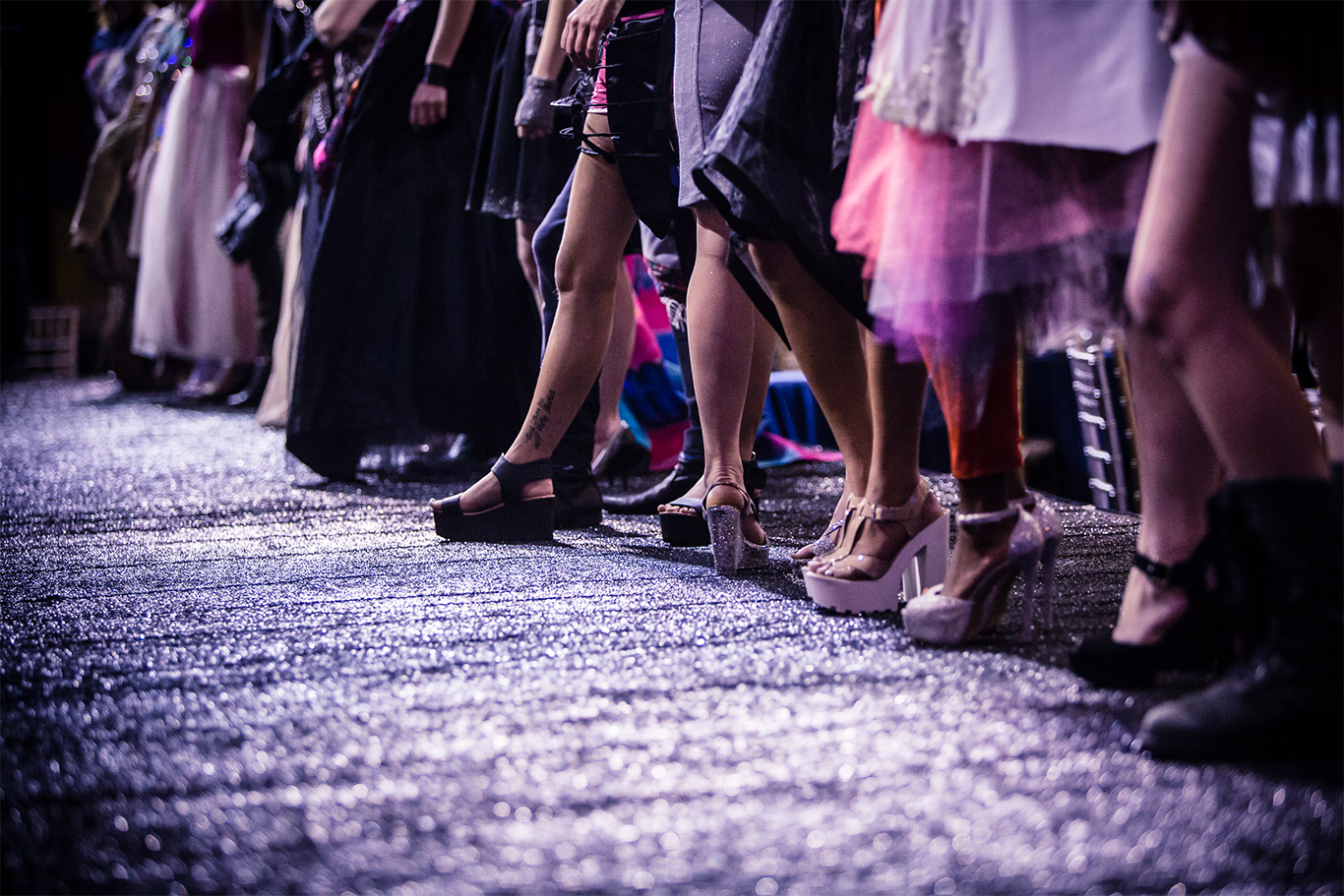
Don’t replicate NYFW. Build-to-suit Seattle.
Traditional fashion week models, including centralized runway shows, industry-exclusive access, and high-caliber media and influencer coverage, were not designed for a city like Seattle. Its culture prizes accessibility, community, and authentic experience over spectacle and exclusivity.
While Fashion Week at the Bellevue Collection validates the opportunity, it also reveals the white space. A mall-exclusive event cannot serve independent designers at scale, build a cross-neighborhood community, or connect a broader fashion ecosystem. Fashion Row Seattle does.
STRATEGIC INSIGHT

A city-wide footprint, connected by rail
The extension of Link Light Rail to the Eastside is a structural advantage that makes a truly regional fashion week logistically viable for the first time. Attendees can move between Seattle neighborhoods and Bellevue without a car, and the Link itself becomes a natural event partner.
NEIGHBORHOOD STRATEGY
-
Downtown Seattle
Nordstrom flagship, Tommy Bahama, and a luxury retail corridor. Primary hub for runway shows, styling appointments, and press events.
-
South Lake Union
Tech-forward activations anchored by Google and Amazon's Seattle presence. Digital experiences, creator programming, and corporate partner receptions.
-
Capitol Hill
Independent boutique corridor and creative community base. Emerging designer showcases, networking events, and nighttime activations.
-
Central District, Chinatown/ID & Rainier Valley
Free and accessible community programming rooted in cultural authenticity. Intentional inclusion of designers and audiences in underrepresented traditional fashion week models.
-
Bellevue (The Bellevue Collection)
Eastside anchor. Leverage existing fashion week infrastructure and foot traffic while expanding programming to feature independent designers at a prominent scale.
-
Link Light Rail (The Connective Thread)
Official transit partner bridging Seattle and Bellevue. Co-branded event routing, in-car activations, and signage across the full line during event week.
Six programming pillars across the region
EVENT PROGRAMMING STRATEGY
-
Hosted across Capitol Hill, South Lake Union, Bellevue, and Belltown venues. Structured, curated networking for designers, influencers, buyers, and press.
-
Nordstrom flagship styling appointments, Tommy Bahama lifestyle activations, and Bellevue Collection trunk shows, all featuring local and independent designers.
-
Panel discussions and keynotes at the Museum of History & Industry connecting Seattle's fashion history of its current creative moment.
-
Intimate runway presentations distributed across neighborhoods and the Bellevue collection. Rooftops, galleries, and cultural centers replace a single centralized venue.
-
Accredited creators embedded across all neighborhoods producing vlogs, style features, and city guides, seeding a Seattle creator economy that outlasts the event week.
-
Free and low costs community touchpoints in the Central District, Chinatown/ID, and Rainier Valley, and accessible Eastside programming via Link Light Rail.

Partnership Spotlight: Google/YouTube
Building Seattle's creator economy, not just covering an event.
New York has an entire ecosystem of lifestyle vloggers who make the city feel aspirational: creators documenting fashion, food, neighborhoods, and culture in ways that compound over time. Seattle has the same raw material: distinctive neighborhoods, a strong visual aesthetic, outdoor culture, and a growing creative class. What it lacks is a catalyst.
Fashion Row Seattle, in partnership with YouTube, creates an accredited creator program that gives Seattle-based vloggers access, credentials, and content infrastructure to document the city through a fashion and lifestyle lens and build a durable content trail that makes the city, the event, and its creators simultaneously.
Sponsors with activation logic, not just logo placement
Each partnership is built around a specific activation value: what the brand brings to attendees and what the event brings to the brand's audience. Partners are organized by role: platform, retail, infrastructure, cultural, community, and transit.
PARTNERSHIP STRATEGY

A full lifecycle campaign from launch to recap
The marketing strategy is built across five integrated channels: experiential, content, social, PR, and lifecycle, with deliberate sequencing to build audience, create urgency, and extend the event's cultural shelf.
MARKETING TIMELINE
-
8 WEEKS OUT
Brand identity reveal, partner announcement cadence, and press seeding. SEO-structured editorial content to capture early search interest around Fashion Row Seattle.
-
4 - 6 WEEKS OUT
Local fashion influencers, TikTok creators, and Seattle-based content accounts briefed and seeded. Pinterest board collaborations launched. Early ticket access drives email list growth.
-
2 WEEKS OUT
Ticket urgency messaging, countdown content, partner cross-promotions, and media previews. Last-call email sequences to registered but non-converted leads.
-
DURING EVENTS
Real-time social coverage, creator content capture at activations, branded hashtag campaigns, and live coverage partnerships with local media outlets.
-
POST-EVENT
Highlight reels, designer spotlights, press recap roundups, and attendee follow-up emails to convert first-time attendees into year-round community members and early next-year registrants.

Producer-level thinking is built into the concept
One of the distinguishing features of this project is that it accounts for execution reality, in addition to creative vision. The operational framework demonstrates an understanding of what it actually takes to run a multi-venue multi-partner event.
OPERATIONS & TEAM STRUCTURE
-
Meeting Cadence
Bi-weekly all-hands and weekly department check-ins to maintain alignment across programming, partnerships, and logistics teams.
-
Asana Workflows
Project management via Asana with department-level boards, milestone tracking, and task ownership assigned across verticals.
-
Team Structure
Departments for programming, partnerships, marketing, operations, and volunteer coordination, each with defined leads and reporting lines.
-
Compensation Model
Tiered compensation structure for full-time staff, contracted vendors, volunteer coordinators, and event-day support personnel.
-
Fulfilment Reporting
Post-event sponsor fulfillment reports detailing deliverables met, impressions generated, and ROI indicators for each partner category.
-
Vendor Coordination
Centralized vendor management for AV, catering, rentals, and logistics across all activation neighborhoods and event venues.
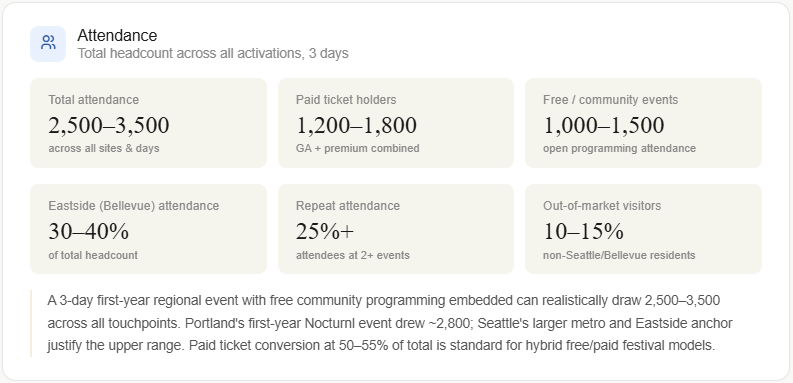
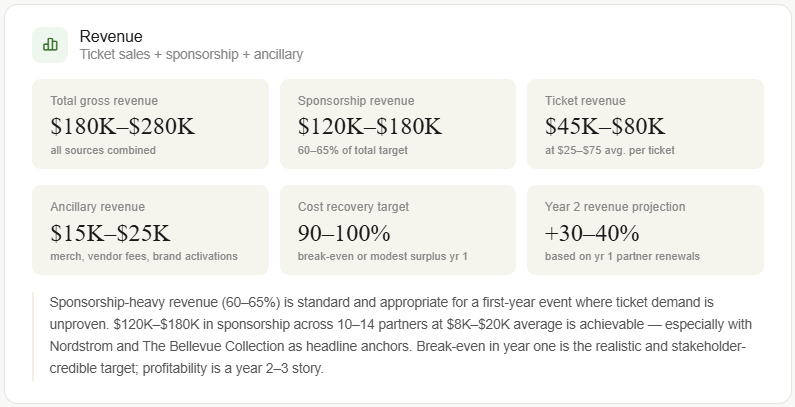
First-year targets: realistic, defensible, ambitious
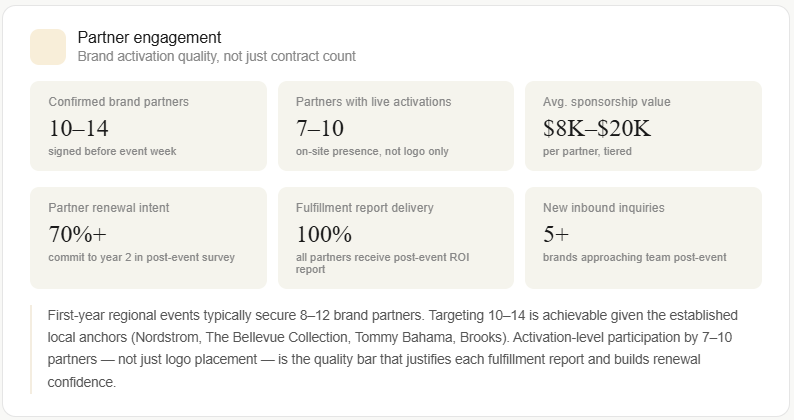
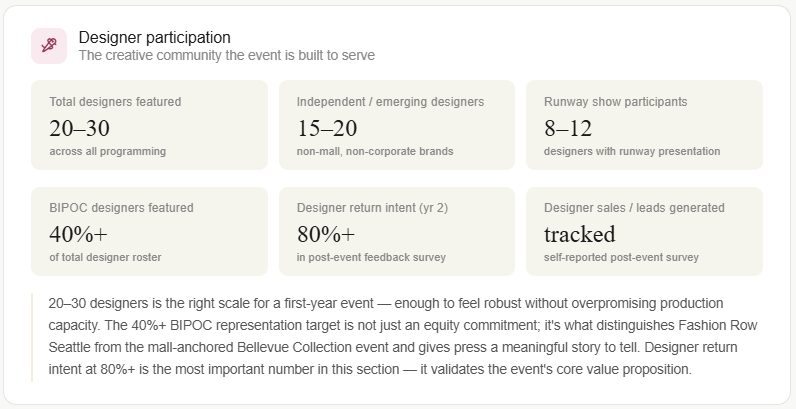
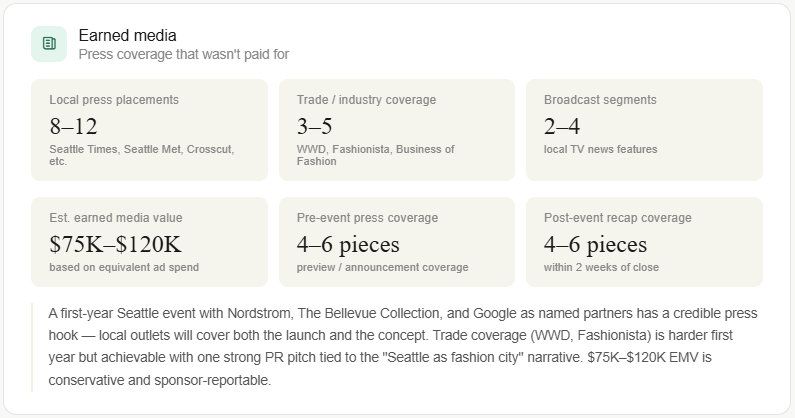
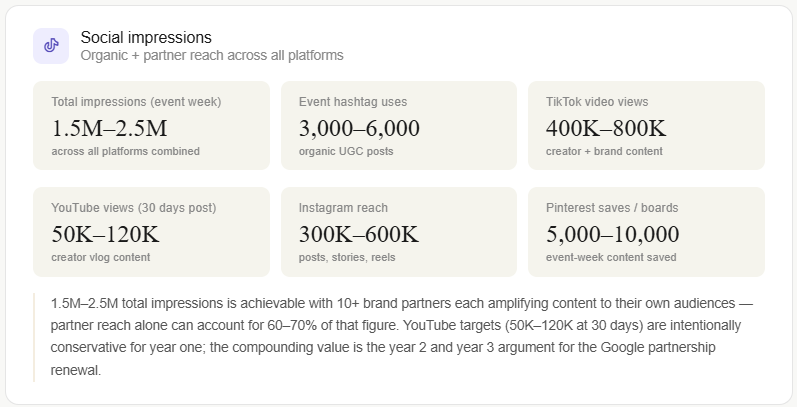
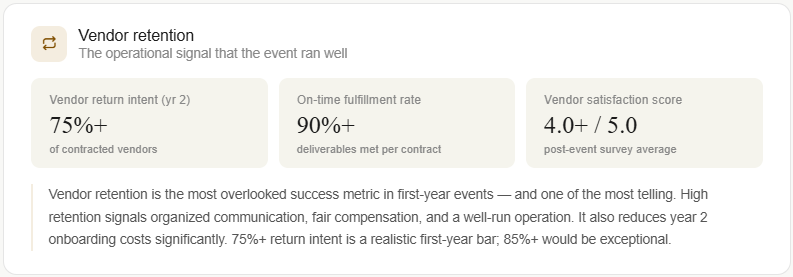
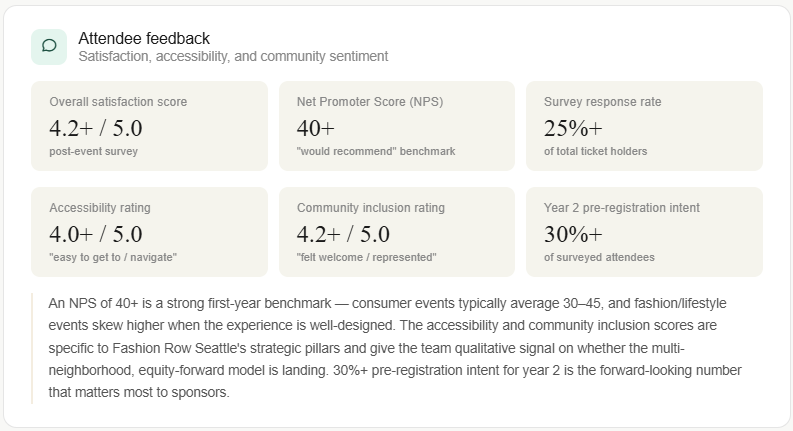
Built for a 3-day moderate-ambition launch at $25 - $75 general admission across a multi-neighborhood, Seattle-Bellevue footprint. Targets are calibrated against comparable regional first-year events: achievable enough to build stakeholder confidence, specific enough to hold the team accountable.
Projected numbers generated by Claude AI.
OPERATIONS & TEAM STRUCTURE
This case study is based on my personal experience working with Seattle Fashion Week and The Fashion Group International - Seattle Region. It reflects an independent exploration of how I would approach hosting an inclusive fashion event to support Seattle’s fashion community.